Best Ear Surgery Specialist in Chembur
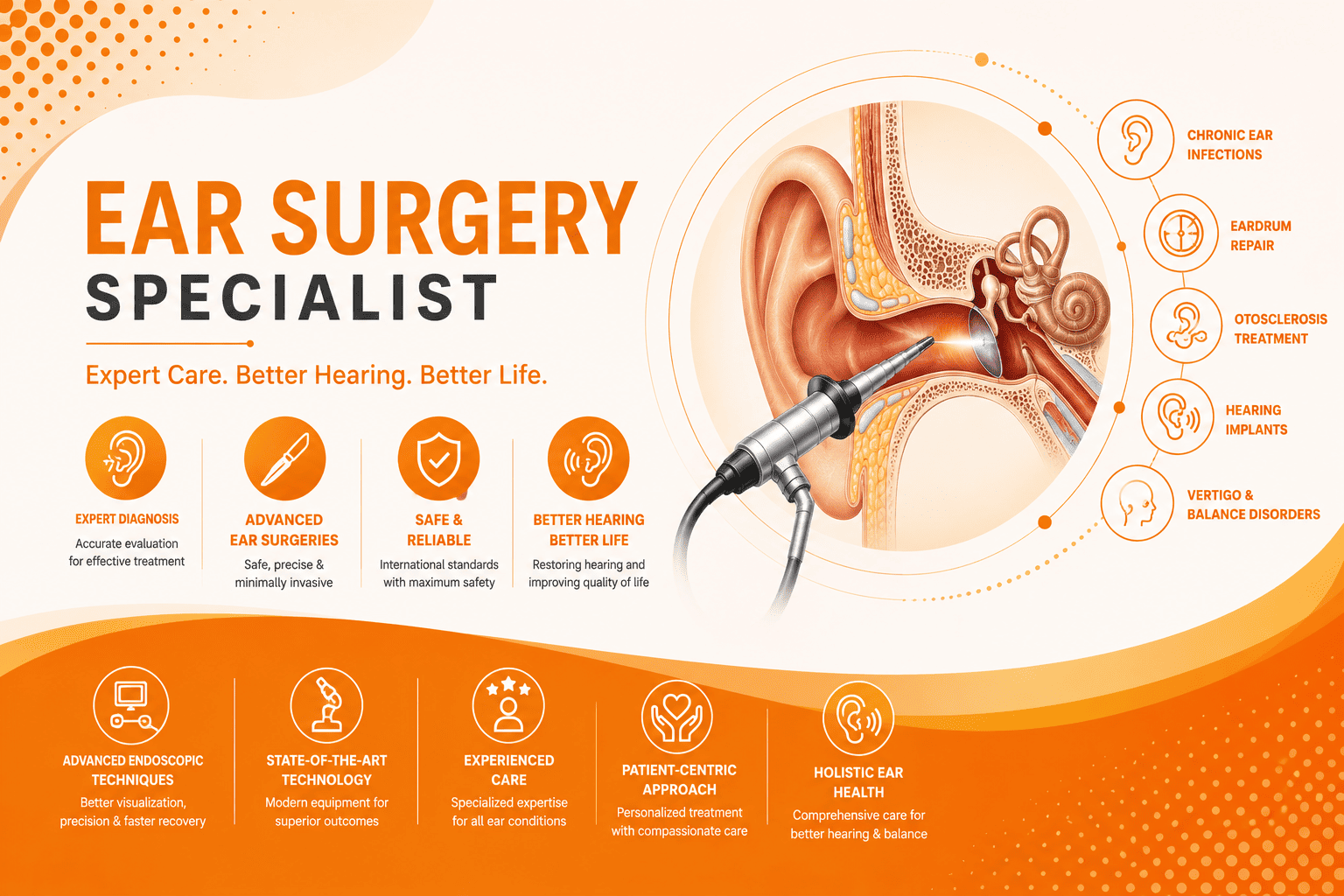
Best Ear Surgery Specialist in Chembur
The ear is one of the most delicate and complex organs in the human body — responsible not only for hearing but also for balance, spatial awareness, and overall neurological well-being. When ear conditions progress beyond what medication can control, expert surgical intervention becomes essential. If you are searching for the best ear surgery specialist in Chembur, you deserve a surgeon who combines fellowship-level training, advanced endoscopic surgical skills, and a genuinely patient-first approach to care. Dr. Vishal Vikas Nair, a fellowship-trained ENT and Skull Base Surgeon with specialised expertise in endoscopic ear surgery and lateral skull base procedures, delivers precisely this standard of surgical excellence to every patient he treats.
What Causes Ear Conditions Requiring Surgery?
Ear disorders that require surgical intervention develop from a wide range of underlying causes. Early identification is critical to preventing irreversible hearing loss or dangerous complications. Common causes include:
- Chronic suppurative otitis media (CSOM) — persistent middle ear infection with eardrum perforation and discharge
- Cholesteatoma — an abnormal, destructive skin-lined cyst that erodes middle ear bones and surrounding structures
- Otosclerosis — abnormal spongy bone growth around the stapes causing progressive conductive hearing loss
- Eustachian tube dysfunction leading to chronic fluid accumulation in the middle ear
- Traumatic eardrum perforation caused by sudden pressure change, injury, or foreign object insertion
- Congenital ear malformations including microtia, atresia, or ossicular chain abnormalities
- Benign or malignant tumours of the external ear canal or temporal bone
- Severe sensorineural hearing loss unresponsive to hearing aids requiring cochlear implantation
- Lateral skull base pathologies involving the temporal bone, jugular foramen, or internal auditory canal
Signs & Symptoms You Should Not Ignore
Many serious ear conditions develop slowly and silently. By the time symptoms become severe, significant damage may already have occurred. Never ignore:
- Persistent or worsening hearing loss in one or both ears
- Chronic ear discharge — particularly if foul-smelling, blood-stained, or unresponsive to ear drops
- Recurrent ear infections that keep returning despite repeated antibiotic courses
- Ear pain or deep aching pressure that does not resolve with standard treatment
- Tinnitus — persistent ringing, buzzing, hissing, or pulsating sounds in the ear
- Vertigo, dizziness, or chronic instability of balance associated with ear disease
- Facial weakness, drooping, or numbness on one side — a serious warning sign of nerve involvement
- A sensation of blocked ears that does not clear despite home remedies or nasal treatment
- Visible white debris or crust deep within the ear canal suggesting cholesteatoma
- Sudden deterioration in hearing following a respiratory infection or head trauma
These symptoms — particularly when persistent or progressive — must be evaluated urgently. Consulting the best ear surgery specialist in Chembur at the right time can prevent minor ear disease from escalating into permanent hearing loss, facial nerve damage, or life-threatening intracranial complications.
Types of Ear Surgery
A comprehensive ear surgery practice covers the full spectrum of middle ear, inner ear, and lateral skull base procedures. Key surgeries include:
- Myringoplasty — repair of an isolated eardrum perforation to restore the acoustic seal and prevent recurrent infection
- Tympanoplasty — reconstruction of the eardrum and middle ear space in cases of chronic otitis media
- Mastoidectomy — surgical removal of infected or diseased mastoid air cells, performed as canal wall up or canal wall down depending on disease extent
- Ossiculoplasty — repair or prosthetic replacement of the ossicular chain to restore conductive hearing
- Stapedectomy or Stapedotomy — microsurgical removal and replacement of the fixed stapes bone in otosclerosis
- Endoscopic Ear Surgery (EES) — fully endoscopic, minimally invasive approach offering superior visualisation without post-auricular incision
- Cholesteatoma Excision — meticulous removal of cholesteatoma with preservation of critical middle ear structures
- Cochlear Implant Surgery — for patients with profound bilateral sensorineural hearing loss
- Lateral Skull Base Surgery — for acoustic neuromas, glomus tumours, and temporal bone malignancies
Treatment & Management
Effective ear surgical care begins with a thorough, structured diagnostic evaluation. This includes pure-tone audiometry and speech discrimination testing, tympanometry and acoustic reflex testing, high-resolution CT scan of the temporal bone to map disease extent and anatomical landmarks, MRI of the internal auditory canal and posterior fossa where soft tissue or nerve involvement is suspected, and flexible endoscopic examination of the ear canal and eardrum.
Non-surgical management is always explored first — including topical antibiotic ear drops for active infection, aural toilet and microsuction cleaning, hearing aids for stable hearing loss, and nasal treatment to optimise Eustachian tube function. Surgery is recommended only when medical management has been optimised and found insufficient, or when the disease is structurally irreversible and poses a risk of progression.
When surgery is performed, the choice between microscopic and endoscopic approach is tailored to the individual case. Endoscopic ear surgery offers particular advantages in confined middle ear spaces — providing wider field visualisation, reduced need for drilling, and faster post-operative recovery. Post-operative care includes regular aural toilet, hearing reassessment, and structured follow-up endoscopy to confirm disease clearance and monitor healing.
Advanced Healthcare Support
Delivering outstanding ear surgical outcomes requires a fully equipped, expertly staffed clinical environment. Patients benefit from:
- High-definition endoscopic and microscopic imaging systems in dedicated ENT and skull base surgical theatres
- Intraoperative facial nerve monitoring — mandatory for all cholesteatoma, mastoid, and skull base procedures
- Intraoperative image guidance (navigation) for complex lateral skull base cases
- Dedicated audiology services including BERA, OAE, and cochlear implant programming
- Experienced anaesthesia teams with expertise in ENT and skull base surgical cases
- Vestibular rehabilitation therapy for patients with post-operative balance disturbance
- Multidisciplinary tumour board involvement for temporal bone and skull base malignancies
- Structured long-term follow-up protocols to monitor hearing outcomes and disease recurrence
This level of integrated, technology-driven, and multidisciplinary support is the true mark of the best ear surgery specialist in Chembur — and the consistent standard of care that Dr. Vishal Vikas Nair upholds for every patient who walks through his doors.
Conclusion
Ear surgery demands the highest levels of surgical precision, anatomical knowledge, and clinical judgement. Whether the condition is a straightforward eardrum perforation or a complex cholesteatoma eroding into the skull base, the outcome is determined by the skill and experience of the surgeon performing it. Choosing the right specialist is not just important — it is everything.
For patients and families across Mumbai seeking the best ear surgery specialist in Chembur, Dr. Vishal Vikas Nair delivers fellowship-trained, endoscopic-first, and patient-centred surgical care — combining world-class technique with genuine compassion to achieve the best possible hearing outcomes and quality of life for every patient.
FAQs
When is ear surgery recommended?
Ear surgery may be recommended for conditions such as chronic ear infections, eardrum perforation, hearing loss, cholesteatoma, otosclerosis, and middle ear disorders that do not improve with medications or conservative treatment.
What types of ear surgeries are commonly performed??
Common ear surgeries include Tympanoplasty (eardrum repair), Mastoidectomy, Ossiculoplasty (hearing bone reconstruction), Stapedotomy, and Cholesteatoma Surgery. The type of surgery depends on the underlying ear condition and hearing status.
How to Prepare for Ear Tube Surgery
Ear tube placement in adults is a quick and relatively uncomplicated procedure. Your healthcare provider will give you instructions to follow prior to the appointment.
Most people are safe to drive themselves after the procedure, but you may want to arrange for a ride just in case. Remember to bring your insurance paperwork and identification to the appointment.
Above Short Content Reference Link : https://www.verywellhealth.com/ear-tube-placement-in-adults-1192068
Service Areas
Ghatkopar Kurla Govandi Mankhurd Trombay Tilak Nagar Chunabhatti Wadala Vidyavihar Sion

Dr. Vishal Vikas Nair is an exceptional ENT specialist whose expertise is matched by his remarkable ability to connect with patients. He explains even the most intricate details of one’s condition with such simplicity that it brings instant clarity and comfort. With a thoughtful approach, he prescribes only what is truly necessary, minimal yet precise medication, guiding patients gently and effectively towards recovery. His practice reflects both science and compassion in perfect harmony.
Excellent treatment. Dr. Vishal Vikas Nair is knowledgeable and treated me very well. He also makes patient to understand the cause of his trouble, treatment and future cautions. Do visit for his treatment when you need. I recommend strongly. In the clinic itself I was totally relieved from my trouble, in few minutes.