Videolaryngoscopic Evaluation of Voice
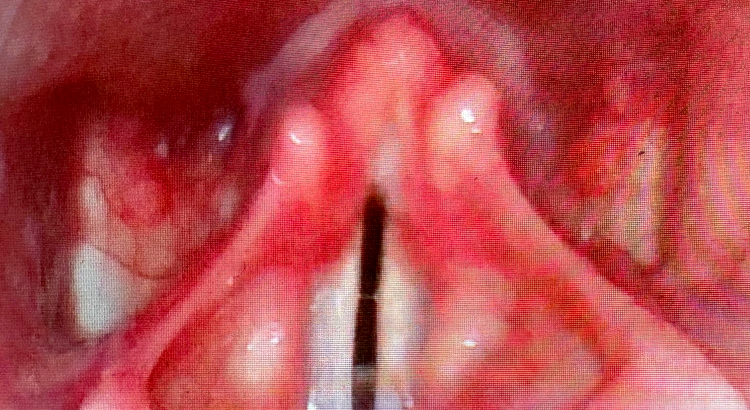
Videolaryngoscopic Evaluation of Voice
Videolaryngoscopic Evaluation of Voice is a comprehensive diagnostic procedure that uses a high-definition video laryngoscope to examine the larynx (voice box) and vocal cords in real time. This advanced assessment allows Dr. Vishal Vikas Nair to accurately diagnose the cause of voice disorders, guide treatment decisions, and monitor treatment outcomes with precision.
What is Videolaryngoscopy?
Videolaryngoscopy involves passing a flexible or rigid endoscope through the nose or mouth to visualise the larynx and vocal cords. The procedure is recorded on high-definition video, allowing detailed analysis of vocal cord structure, movement, and vibration. When combined with stroboscopy (videostrobolaryngoscopy), it provides slow-motion visualisation of vocal cord vibration patterns, enabling detection of subtle mucosal lesions and vibratory abnormalities.
Conditions Evaluated
- Hoarseness and dysphonia (voice change)
- Vocal cord nodules, polyps, and cysts
- Vocal cord paralysis or paresis
- Reinke's oedema
- Laryngeal papillomatosis
- Laryngeal leukoplakia and dysplasia
- Muscle tension dysphonia
- Spasmodic dysphonia
- Laryngopharyngeal reflux (LPR)
- Laryngeal carcinoma screening
- Post-surgical voice assessment
Who Needs Videolaryngoscopic Evaluation?
- Professional voice users (singers, teachers, actors, public speakers)
- Anyone with hoarseness lasting more than 2–3 weeks
- Patients with voice fatigue or loss of vocal range
- Individuals with throat pain, globus sensation, or chronic cough
- Patients with difficulty swallowing or breathing
- Post-thyroid or neck surgery voice assessment
- Children with voice problems or stridor
The Evaluation Process
Clinical History
Detailed assessment of voice symptoms, onset, duration, aggravating factors, and vocal demands.
Perceptual Voice Assessment
Listening to the voice quality, pitch, loudness, and resonance to characterise the nature of the voice disorder.
Videolaryngoscopy
High-definition endoscopic examination of the larynx and vocal cords, recorded for detailed analysis and documentation.
Videostrobolaryngoscopy
Stroboscopic light source used to visualise vocal cord vibration in slow motion, detecting subtle mucosal wave abnormalities.
Acoustic Voice Analysis
Computerised analysis of voice parameters including fundamental frequency, jitter, shimmer, and noise-to-harmonic ratio.
Benefits of Videolaryngoscopic Evaluation
- Accurate diagnosis of the cause of voice problems
- Non-invasive, well-tolerated outpatient procedure
- Video documentation for patient education and follow-up comparison
- Guides appropriate medical, surgical, or voice therapy treatment
- Early detection of pre-malignant or malignant laryngeal lesions
- Objective monitoring of treatment response
Why Choose Dr. Vishal Vikas Nair?
- Expert in laryngology and voice disorders
- State-of-the-art videolaryngoscopy and stroboscopy equipment
- Comprehensive voice clinic with acoustic analysis
- Collaboration with speech-language pathologists for voice therapy
- Personalised treatment plans for professional and non-professional voice users