Endoscopic Stapedotomy
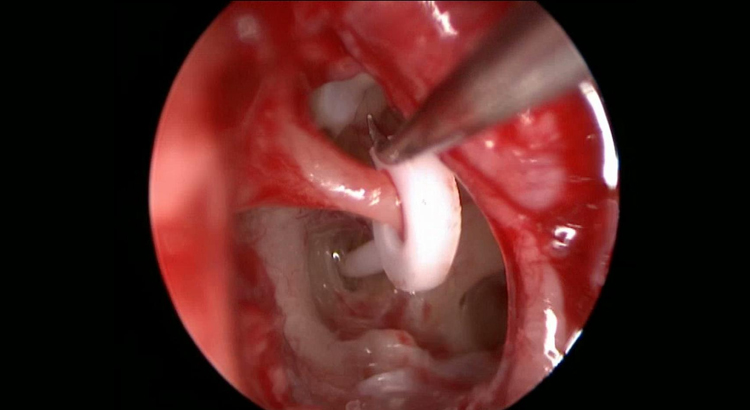
Endoscopic Stapedotomy
Endoscopic Stapedotomy is a minimally invasive surgical procedure performed to treat otosclerosis — a condition where abnormal bone growth around the stapes (the smallest bone in the ear) causes progressive conductive hearing loss. Using advanced endoscopic techniques, Dr. Vishal Vikas Nair performs this procedure with exceptional precision and minimal disruption to surrounding structures.
What is Endoscopic Stapedotomy?
Stapedotomy involves creating a small opening in the fixed stapes bone and replacing it with a prosthesis to restore normal sound transmission. The endoscopic approach provides a wider, magnified view of the middle ear through the ear canal, eliminating the need for external incisions and offering faster recovery compared to traditional microscopic techniques.
Conditions Treated
- Otosclerosis (abnormal stapes bone fixation)
- Conductive hearing loss
- Progressive hearing deterioration
- Tinnitus associated with otosclerosis
- Failed previous stapedectomy
Procedure Overview
The surgery is performed under general or local anaesthesia. A high-definition endoscope is introduced through the ear canal to visualise the middle ear. The fixed stapes is carefully removed and replaced with a titanium or Teflon prosthesis that restores the mechanical sound conduction pathway. The entire procedure typically takes 45–90 minutes.
Benefits of Endoscopic Stapedotomy
- No external incision or scar
- Excellent hearing improvement outcomes
- Minimally invasive with faster recovery
- Reduced post-operative pain
- Shorter hospital stay
- Superior visualisation of middle ear structures
Symptoms That May Require Stapedotomy
- Gradual, progressive hearing loss
- Difficulty hearing low-frequency sounds
- Ringing or buzzing in the ears (tinnitus)
- Hearing better in noisy environments (paracusis)
- Family history of otosclerosis
Why Choose Dr. Vishal Vikas Nair?
- Specialist in endoscopic ear surgery techniques
- High success rate in hearing restoration
- Advanced surgical equipment and technology
- Personalised pre- and post-operative care
- Comprehensive audiological evaluation and follow-up