Best Treatment for Allergy in Chembur
Best Treatment for Allergy in Chembur
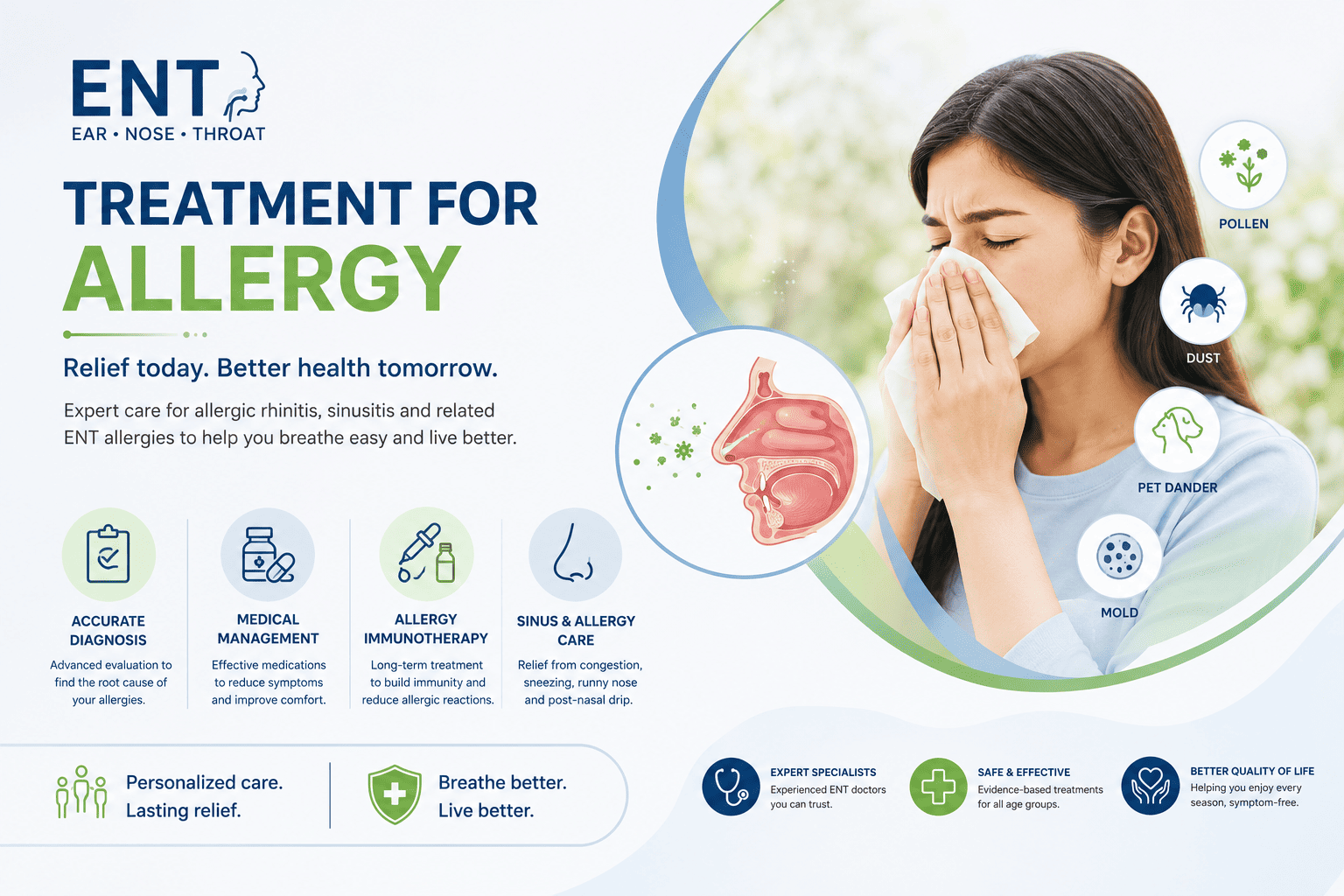
Allergies are among the most widespread yet frequently mismanaged health conditions in urban India. Persistent sneezing, blocked nose, itchy eyes, chronic cough, and skin reactions — these are not just minor inconveniences. They are signs of an overactive immune system that, without proper care, can significantly disrupt daily life, sleep, productivity, and long-term respiratory health. If you are searching for the best treatment for allergy in Chembur, finding a specialist who combines accurate diagnostic testing with targeted, evidence-based treatment is the most critical step toward lasting relief. Dr. Vishal Vikas Nair, a fellowship-trained ENT and Skull Base Surgeon with deep expertise in rhinology and sinonasal disorders, offers comprehensive allergy care that addresses the root cause — not just the symptoms.
What Causes Allergies?
Allergies occur when the immune system overreacts to substances that are otherwise harmless to most people. These triggers — known as allergens — provoke an exaggerated inflammatory response in the nose, throat, eyes, skin, or lungs. Common causes and triggers include:
- Airborne allergens — house dust mites, cockroach particles, and indoor mould spores
- Outdoor allergens — pollen from trees, grasses, and weeds, particularly during seasonal changes
- Pet dander — proteins shed from the skin, saliva, and urine of cats, dogs, and other animals
- Environmental pollution — vehicular exhaust, industrial chemicals, and particulate matter in Mumbai's urban air
- Fungal spores — common in humid indoor environments and poorly ventilated spaces
- Food allergens — including milk, eggs, peanuts, shellfish, and wheat in susceptible individuals
- Occupational allergens — chemicals, flour dust, latex, or industrial fumes encountered at the workplace
- Nasal polyps and chronic sinusitis — both closely linked to allergic inflammation of the nasal lining
- Medications — aspirin, NSAIDs, and certain antibiotics triggering allergic or hypersensitivity reactions
- Genetic predisposition — a strong family history of asthma, eczema, or hay fever significantly increases personal risk
Signs & Symptoms You Should Not Ignore
Allergic conditions present across a wide spectrum of severity. Many patients live with undertreated allergies for years, assuming their symptoms are normal. Watch closely for:
- Persistent or recurrent sneezing, particularly in the morning or on exposure to dust
- Chronic nasal congestion, blockage, or runny nose lasting beyond two weeks
- Itchy, watery, or red eyes — a hallmark of allergic conjunctivitis
- Post-nasal drip causing chronic throat irritation, hawking, or dry cough
- Itching of the nose, throat, palate, or ears without obvious cause
- Skin reactions — hives, eczema flares, or contact dermatitis after allergen exposure
- Recurrent sinusitis or nasal polyps — both strongly associated with untreated allergic rhinitis
- Worsening of asthma symptoms triggered by nasal allergen exposure
- Disturbed sleep, snoring, or mouth breathing due to chronic nasal obstruction
- Fatigue, reduced concentration, and impaired daily functioning during allergy flare-ups
These symptoms — especially when recurrent, seasonal, or progressively worsening — demand prompt specialist evaluation. Accessing the best treatment for allergy in Chembur early prevents simple allergic rhinitis from evolving into chronic sinusitis, nasal polyps, or allergic asthma.
Types of Allergic Conditions Treated
A specialist ENT allergist manages a comprehensive range of allergic conditions, including:
- Allergic Rhinitis — seasonal or perennial nasal allergy causing sneezing, congestion, and runny nose
- Non-Allergic Rhinitis — chronic nasal symptoms triggered by irritants rather than true allergens
- Allergic Conjunctivitis — eye allergy frequently co-existing with nasal allergy
- Chronic Rhinosinusitis with Nasal Polyps — strongly linked to allergic and eosinophilic inflammation
- Allergic Fungal Sinusitis (AFS) — a distinct fungal-driven form of chronic sinusitis requiring specialist management
- Occupational Rhinitis — workplace allergen-triggered nasal symptoms
- Oral Allergy Syndrome — itching of the mouth and throat triggered by certain raw foods
- Urticaria and Angioedema — hives and deeper tissue swelling caused by allergic reactions
- Aspirin-Exacerbated Respiratory Disease (AERD) — a triad of asthma, nasal polyps, and aspirin sensitivity
Treatment & Management
Comprehensive allergy management begins with a structured diagnostic assessment — including detailed allergy history, skin prick testing (SPT) for common aeroallergens and food allergens, specific IgE blood testing (RAST), nasal endoscopy to assess the nasal lining and detect polyps, and spirometry or peak flow measurement where asthma coexists.
- Treatment is always individualised and staged according to severity:
- Allergen Avoidance Measures — practical, evidence-based guidance on reducing exposure to identified triggers at home, workplace, and outdoors
- Pharmacotherapy — including intranasal corticosteroid sprays, oral antihistamines, leukotriene receptor antagonists, nasal saline irrigation, and decongestants as appropriate
- Allergy Immunotherapy (AIT) — the only disease-modifying treatment for allergic rhinitis, available as subcutaneous injections (SCIT) or sublingual drops and tablets (SLIT), gradually desensitising the immune system to specific allergens over a structured treatment course
- Biological Therapy — for severe, refractory cases of nasal polyposis and allergic disease, targeted biologic agents such as dupilumab offer remarkable disease control
- Endoscopic Sinus Surgery — when chronic sinusitis, nasal polyps, or allergic fungal sinusitis require surgical clearance to restore normal sinus drainage and improve medication delivery
- Dietary Modification & Nutritional Guidance — for patients with food allergies or oral allergy syndrome
Post-treatment follow-up includes repeat allergy testing, symptom scoring, nasal endoscopy, and structured reassessment of immunotherapy response at regular intervals.
Advanced Healthcare Support
Delivering the best allergy care requires far more than a prescription pad. Patients benefit from a fully integrated allergy management ecosystem, including:
- In-clinic skin prick testing and allergen-specific IgE blood panel assessment
- High-definition nasal endoscopy for direct visualisation of nasal and sinus mucosa
- Spirometry and FeNO (fractional exhaled nitric oxide) testing for co-existing asthma evaluation
- Structured allergen immunotherapy programmes — both subcutaneous and sublingual
- Dedicated ENT surgical facilities for cases requiring endoscopic sinus and polyp surgery
- Multidisciplinary collaboration with pulmonology, dermatology, and immunology specialists
- Patient education on allergen avoidance, inhaler technique, and long-term allergy self-management
This depth of clinical infrastructure and specialist collaboration is the defining hallmark of the best treatment for allergy in Chembur — and the unwavering standard that Dr. Vishal Vikas Nair maintains for every allergy patient under his care.
Conclusion
Allergies are chronic, complex, and deeply personal — but they are also highly treatable when managed by the right specialist with the right tools. Whether you suffer from seasonal hay fever, year-round nasal allergy, recurrent sinusitis, or complex nasal polyps driven by allergic inflammation, a precise diagnosis and a personalised treatment plan can transform your daily life.
For patients and families across Mumbai seeking the best treatment for allergy in Chembur, Dr. Vishal Vikas Nair offers comprehensive, evidence-based, and compassionate allergy care — from accurate diagnosis and targeted pharmacotherapy to advanced immunotherapy and endoscopic surgery — delivering lasting relief and a significantly improved quality of life.
FAQS
How is an allergy diagnosed?
Diagnosis may involve a detailed medical history, physical examination, allergy skin testing, or blood tests to identify the specific allergens responsible for your symptoms. Accurate diagnosis helps create an effective treatment plan.
What treatments are available for allergies?
Treatment options include allergen avoidance, antihistamines, nasal sprays, decongestants, immunotherapy (allergy shots), and lifestyle modifications. The best treatment depends on the type and severity of the allergy.
How long can allergies last?
Your allergies will continue as long as you’re exposed to the allergen. Some start within minutes of exposure, while others don’t start until hours or days later. Once you’re no longer around allergens, your symptoms should go away after a few hours. Some allergies, like poison ivy rashes, can last for a few weeks.
Above Short Content Reference Link : https://my.clevelandclinic.org/health/diseases/8610-allergies
Service Areas
Ghatkopar Kurla Govandi Mankhurd Trombay Tilak Nagar Chunabhatti Wadala Vidyavihar Sion

Dr. Vishal Vikas Nair is an exceptional ENT specialist whose expertise is matched by his remarkable ability to connect with patients. He explains even the most intricate details of one’s condition with such simplicity that it brings instant clarity and comfort. With a thoughtful approach, he prescribes only what is truly necessary, minimal yet precise medication, guiding patients gently and effectively towards recovery. His practice reflects both science and compassion in perfect harmony.
Excellent treatment. Dr. Vishal Vikas Nair is knowledgeable and treated me very well. He also makes patient to understand the cause of his trouble, treatment and future cautions. Do visit for his treatment when you need. I recommend strongly. In the clinic itself I was totally relieved from my trouble, in few minutes.